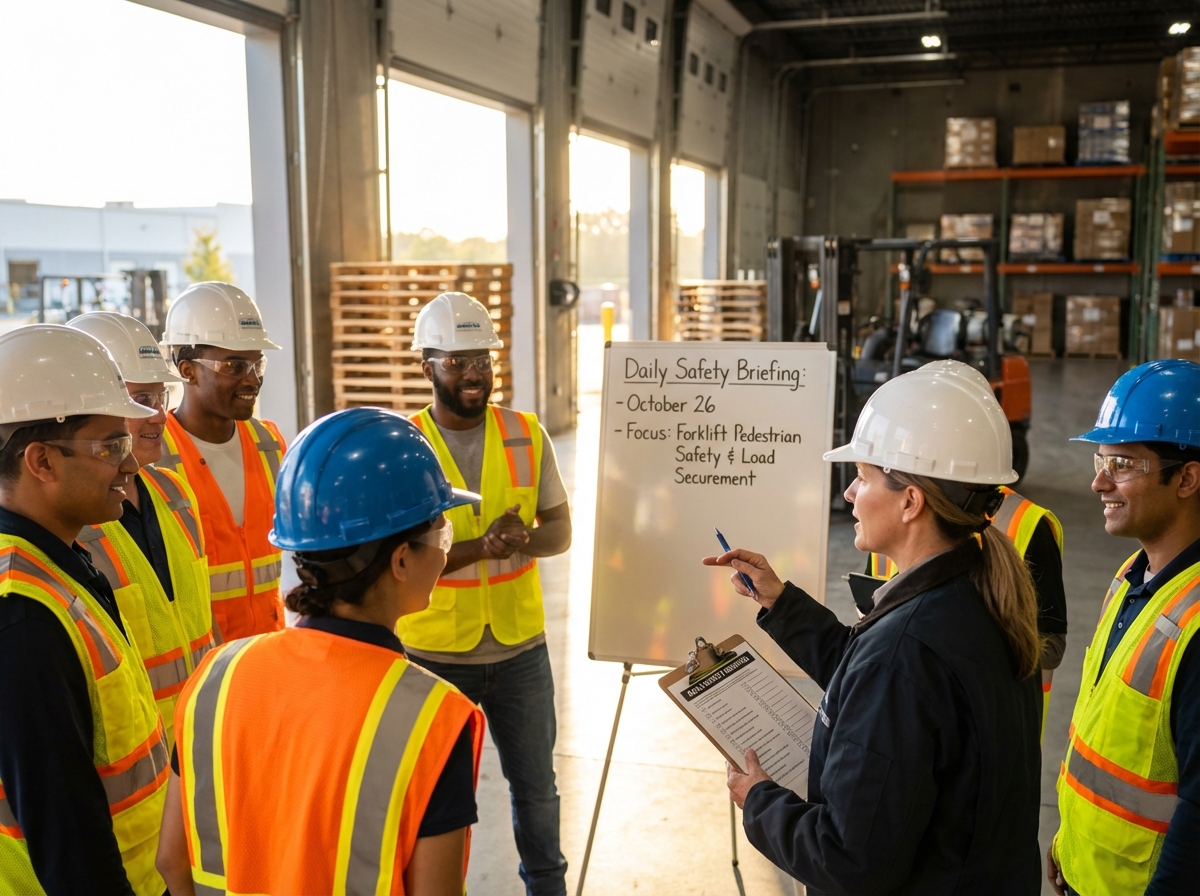
Toolbox talks are short, targeted safety briefings that drive daily risk awareness and safe behavior in industrial settings. This article explores how to choose relevant topics, design engaging delivery, measure impact, and integrate toolbox talks into broader safety programs for plants, warehouses, and construction sites across the United States.
Selecting High-Impact Topics and Building a Rolling Schedule
Picking the right topic for a toolbox talk is more than just checking a box on a safety requirement list; it is about making sure the information actually sticks when the crew hits the floor. Choosing the right safety topics requires a shift from generic lists to data-driven decisions. A successful program relies on relevance. If workers feel the information applies to their specific tasks for the day, engagement increases.
You should start by reviewing your internal data. Incident logs, near-miss reports, and safety observations provide the most direct evidence of where risks exist. If maintenance reports show a spike in minor hand injuries during tool changes, your next three talks should focus on glove selection and tool handling. If safety observations indicate people are skipping seatbelts on forklifts, you address that immediately. Near-miss reports are particularly valuable because they show where a disaster almost happened. Using these reports to choose a topic shows the crew that you are paying attention to their actual work environment.
Topic Selection Rules
Effective managers follow three simple rules for prioritization. First, always address the top three causes of incidents in your facility within the first month of any new schedule. Second, use toolbox talks to follow up on recent corrective actions. If a machine guard was repaired after a near miss, explain the fix and the “why” behind it. Third, include one positive recognition or safety success item in every session. Highlighting a team that correctly identified a hazard reinforces the behavior you want to see across the site.
Building the Curriculum
A rolling 6 to 12-week schedule prevents the “what should we talk about today” panic. This schedule should rotate through different hazard classes to ensure full coverage of risks. An annual curriculum provides the broader framework. It must include core refreshers for high-risk activities like lockout/tagout or fall protection. It also needs to account for seasonal risks. In the United States, heat illness prevention talks should begin in May for southern regions, while winter driving and cold stress topics belong in the November to February window. This structured approach ensures that new hire orientation items and recurring regulatory requirements are never missed.
Example Topics by Environment
The following table provides 45 high-value topic titles categorized by the specific workplace environment. These are designed to align with OSHA standards and common industrial hazards.
| Plant Operations | Warehouse and Logistics | Construction Sites |
|---|---|---|
| Lockout Tagout Verification | Forklift Pedestrian Interface | Fall Protection Requirements |
| Machine Guarding Integrity | Safe Pallet Stacking Heights | Scaffolding Inspection Steps |
| Chemical Hazard Communication | Manual Lifting Techniques | Excavation and Trenching Safety |
| Confined Space Entry Permits | Dock Leveler Safety | Struck By Hazard Awareness |
| Pressure Vessel Awareness | Conveyor Jam Clearing | Ladder Three Point Contact |
| Hot Work Permit Procedures | Battery Charging Hazards | Electrical Cord Inspections |
| Emergency Shutdown Locations | Shrink Wrap Blade Safety | Personal Fall Arrest Systems |
| Noise Exposure and Earplugs | Racking Damage Reporting | Rigging and Sling Safety |
| Eye Protection for Grinding | High Traffic Area Visibility | Power Tool Guarding |
| Arc Flash Boundary Safety | Trailer Chocking Protocols | Heat Illness Hydration |
| Valve Identification Tags | Ergonomic Reach Zones | Silica Dust Suppression |
| Compressed Air Safety | Empty Pallet Handling | Crane Signal Communication |
| Line Breaking Procedures | Overhead Obstruction Risks | Trench Shield Positioning |
| Robot Cell Entry Safety | Cold Storage PPE | Leading Edge Awareness |
| Spill Kit Response Steps | Pedestrian Right of Way | Site Traffic Control Plans |
Structuring the Talk
Keep the delivery between 5 to 15 minutes. Research into adult learning suggests that attention starts to drop significantly after the twenty-minute mark. A focused ten-minute huddle allows for 3 to 5 key points without disrupting the production schedule. Use visual aids whenever possible; a photo of an actual hazard found on your site is more powerful than a stock image. If you are discussing PPE, perform a rapid micro-drill where workers demonstrate the correct way to don and doff the gear. Holding these talks at the start of the shift ensures that safety is the first thing on everyone’s mind.
The Facilitator Template
Standardizing the format helps supervisors lead with confidence. A simple one-page outline ensures consistency across different shifts and departments. You can use the following structure for every talk.
Topic Title: [Insert Topic]
Objective: One sentence on what workers will learn.
Hazards: Bulleted list of specific risks at this site.
Controls: Steps to take to stay safe.
Demonstration: A 2 minute physical show of a tool or procedure.
Action Items: Who is doing what and by when.
Techniques to make toolbox talks engaging and effective
Moving from a lecture format to an interactive discussion changes how crews view safety. When a supervisor reads from a sheet without looking up, workers tend to tune out. High engagement happens when the crew participates in the conversation. Peer-led talks are one of the most effective ways to do this. Having a respected crew member lead the session increases the relevance of the message. Workers often listen more closely to a colleague who faces the same daily risks.
Narrative storytelling is another powerful tool. NIOSH research indicates that narrative stories about near misses or past incidents improve retention much better than listing rules. When you share a story about a real event that happened on a similar site, it makes the hazard feel personal. This approach helps workers visualize the consequences of a shortcut.
Interactive Delivery Methods
Engagement requires movement and participation. Use micro-drills to break up the talking. A micro-drill is a sixty-second exercise where workers demonstrate a specific skill. You might ask someone to show the correct way to don a harness or how to verify a lockout point. These quick physical actions improve muscle memory.
Scenario-based discussions help with hazard recognition. Instead of telling the crew to watch for trip hazards, describe a specific work area. Ask them to identify three things that could go wrong in that spot. Use open questions that require more than a yes or no answer. Questions like “How would we handle a hydraulic leak on this specific machine?” force the team to think through the steps.
Stop-work authority role-play is essential for building a strong safety culture. Practice a five-minute scenario where a junior worker has to tell a senior lead to stop because of a safety concern. This builds the confidence needed to intervene in real situations. It shows the crew that the company supports their right to halt unsafe work.
Adapting to Your Audience
A message only works if everyone understands it. In many U.S. industrial settings, crews have varying literacy levels or speak different languages. Simplify the language by removing technical jargon. Use visual cues like photos of the actual job site instead of stock images. If the crew is multilingual, tag your topics by language and use bilingual facilitators or interpreters. Providing simple one-page handouts or checklists helps workers carry the message with them throughout the shift.
Scripts and Opening Lines
The first thirty seconds determine if the crew will pay attention. Avoid starting with “Today’s topic is…” because it sounds like a school lesson. Use opening lines that connect to their immediate tasks.
Opening Line Example
“We are moving the heavy racking today. Last time we did this, a pallet almost tipped because the floor wasn’t level. Let’s talk about how we prevent that today.”
Transition to Demonstration
“Now that we know the risk, let’s look at the stabilizer legs on this lift. Mike, show us how you check the locking pin.”
Closing for Commitment
“Before we start, I need everyone to commit to checking their path for debris before every load. Can we all agree to that?”
The Role of Supervisors and Champions
Supervisors must act as facilitators rather than drill sergeants. This involves active listening and giving corrective guidance without blame. If a worker identifies a hazard, recognize that behavior publicly. Positive reinforcement is a core part of behavior-based safety. Specific feedback like “I appreciate how you double-checked the LOTO tags this morning” is more effective than general praise.
Safety champions are workers who naturally follow the rules and look out for others. Identify these individuals and give them a role in the talks. They can help mentor newer employees and provide feedback on whether the talks are actually useful for the frontline.
Integrating Technology for Better Results
By late 2025, many organizations have moved toward digital toolbox talks. Mobile tech and AI reduce the administrative burden. These tools allow safety teams to use AI to auto-generate templates based on real-time incident data. QR codes are a fast way to handle sign-in sheets; workers scan the code with their phones to record their attendance instantly. This creates a digital record that is easy to pull up during an audit. Digitizing the process makes the program traceable, allowing you to see which topics are being delivered and where gaps in attendance exist.
Short video clips can demonstrate complex procedures better than words. A ninety-second video of a rigging setup provides a clear visual standard for the whole team. For distributed or remote teams, virtual toolbox talks via video calls keep everyone aligned even when they aren’t in the same location.
Measuring Engagement and Avoiding Pitfalls
You need to know if the message is sticking. Use quick show-of-hands polls or three-question quizzes at the end of the session. Record verbal commitments in the talk log. Follow up with spot checks during the shift to see if the crew is practicing what was discussed.
Avoid common pitfalls that kill engagement. Sessions that run longer than fifteen minutes usually lose the audience. Lecturing about irrelevant topics or failing to follow up on reported hazards will make the crew stop taking the meetings seriously. If a worker points out a broken tool during a talk, ensure it is fixed or replaced quickly.
Industry Specific Examples
Construction
Conduct a harness fit check where partners inspect each other. This reinforces the buddy system and ensures equipment is worn correctly.
Warehouse
Create a “blind spot” demonstration. Have a worker sit in a forklift while others stand in various spots to show exactly where the driver cannot see them.
Manufacturing Plant
Perform a live walk-through of an energy isolation map. Point out the exact valves and switches that need to be locked out for a specific machine.
Documentation and Follow-Up Template
Keeping accurate records is vital for compliance and tracking progress. Use a simple table to capture the essential details of every session.
| Date and Location | Topic and Facilitator | Action Items Identified | Owner and Due Date |
|---|---|---|---|
| 12/24/2025 – Bay 4 | Forklift Pedestrian Safety – J. Doe | Repaint floor markings in Zone B | Maintenance – 01/05/2026 |
| 12/24/2025 – Site A | Fall Protection – R. Smith | Replace frayed lanyard found in Bin 2 | Safety Lead – 12/26/2025 |
Regularly holding these meetings is one of the 7 reasons you should be holding toolbox talks to maintain a high level of focus. Tracking the completion of action items shows the crew that their input leads to real changes in the workplace.
Frequently Asked Questions about toolbox talks
Implementing a consistent safety meeting schedule often brings up practical hurdles for managers. These common questions reflect the challenges of maintaining engagement while staying compliant with current standards.
How often should we hold toolbox talks?
Frequency Standards
Daily talks are the most effective way to reduce incidents. Statistics from the Associated Builders and Contractors show that companies holding daily huddles can see an 85 percent lower Total Recordable Incident Rate than those meeting monthly. At a minimum, aim for a weekly deep dive. Supplement this with daily two-minute “safety moments” to address immediate site hazards. High-risk industries like construction or heavy manufacturing benefit most from this daily rhythm. It aligns the crew before work begins.
Are toolbox talks required by OSHA?
Compliance Reality
OSHA does not use the specific phrase “toolbox talk” in its regulations. However, standards like 29 CFR 1910 and 1926 require employers to provide effective training. Workers must demonstrate they understand the hazards of their jobs. Toolbox talks are a primary method for meeting the “employee participation” and “training” requirements of a safety management system. They serve as evidence that you are communicating site-specific risks. This is vital during an inspection to prove an active safety culture exists.
Who should lead talks and how do we prepare new leaders?
Facilitator Selection
Frontline supervisors usually lead these meetings. Rotating the responsibility to “safety champions” among the crew can increase peer buy-in. To prepare a new leader, provide a mentor session for thirty minutes. Give them a pre-written script or a one-page outline. This reduces the pressure of public speaking. Encourage them to use personal stories or recent near misses to make the talk feel authentic. Peer-led talks often feel less like a lecture and more like a professional discussion.
How do we handle resistance or low attendance?
Engagement Troubleshooting
Resistance often stems from irrelevant topics. Ensure every talk connects to the work being done that day. If attendance is low, try moving the meeting to the actual work area instead of a breakroom. Use small group breaks to make the setting less intimidating. Some managers use incentive systems tied to participation. Rotating facilitators also helps. It prevents the “Charlie Brown” effect where workers tune out the same voice every morning.
What topics are required for new hires and contractors?
Onboarding Essentials
New hires need a site orientation talk on day one. This must cover emergency exit routes, PPE requirements, and hazard communication. For contractors, focus on the interface between their work and your site operations. Include permit-to-work procedures and site-specific machinery risks. Follow up with new hires within thirty days to reinforce these core concepts. This ensures they have transitioned from general knowledge to site-specific safety habits.
How do we link talks to incident investigations?
Corrective Action Loops
When a near miss or an accident occurs, use the findings to fuel your next talk. Hold this session within forty-eight hours of the event. Do not use the talk to assign blame. Instead, focus on the root causes and the new controls being implemented. This turns a negative event into a proactive learning moment. It also shows the crew that their near-miss reports lead to actual changes in the workplace.
How do we measure effectiveness and show ROI?
Safety Metrics
Track leading indicators to see if the talks are working. Monitor the attendance rate and the number of safety observations submitted after a talk. A high “talk to action” conversion rate is a strong sign of health. Compare these numbers against your lagging indicators like the Total Recordable Incident Rate over six months. Many teams now use mobile tech and AI to track these KPIs in real time. This data proves to leadership that the time spent in huddles reduces the cost of injuries.
| KPI Category | Metric to Track | Target Goal |
|---|---|---|
| Participation | Attendance Percentage | 90% or higher |
| Responsiveness | Action Items Closed | 80% within 30 days |
| Proactivity | Near Miss Reports | 20% increase post-talk |
| Compliance | PPE Audit Pass Rate | 95% or higher |
Final takeaways and next steps for a stronger safety program
Moving from theory to practice is where many safety programs stumble. You have the facts and you know that daily meetings can lead to an 85 percent drop in incident rates. The challenge is making this a habit on the shop floor or the construction site. To help you get started, I have put together a clear path to turn these ideas into a working system. This roadmap focuses on small wins that build trust with your crew.
Immediate Implementation Roadmap
Audit current frequency and topics
Start by looking at what you did over the last month. Check if your meetings happened as scheduled and if the topics actually related to the work being done. If you find that you are repeating the same generic warnings, it is time to change. Use your recent safety logs to see where the real risks are. This audit gives you a baseline to measure your progress.
Create a 12-week rolling schedule
Planning ahead prevents the last-minute scramble for a topic. Build a calendar that covers core risks like fall protection and lockout tagout once a month. Fill the remaining weeks with seasonal issues or specific equipment tasks. A rolling schedule ensures you cover the basics without getting stale. It also lets facilitators prepare their demonstrations in advance.
Prepare 10 ready-to-run talk outlines
Do not ask your supervisors to write their own material from scratch. Give them ten simple one-page guides that include a clear goal, three key points, and a demonstration. These should be user-centered designed toolbox talks that focus on the worker experience. Having these ready means a meeting can happen even on a busy morning.
Assign facilitators and mentor new leaders
Safety should not only be the voice of the manager. Pick experienced workers to lead some sessions. If a lead is new to speaking, pair them with a mentor for the first three talks. This builds leadership skills and makes the message feel more authentic to the crew. Peer-led talks often get better engagement because the advice comes from someone doing the job.
Implement simple documentation and tracking
Keep the paperwork light so it actually gets done. Use a simple sign-in sheet or a QR code for digital check-ins. You need to track who was there and what was discussed. Digital tools can save time and make it easier to pull records during an audit. The goal is to spend more time talking and less time filing papers.
Run a pilot in one shift
Do not try to change the whole company at once. Pick one shift or one project site to test your new schedule and outlines for 30 days. This allows you to find the bugs in your process without causing site-wide confusion. You can learn what works for your specific environment before rolling it out to everyone else.
Incorporate feedback loops
At the end of each talk, ask the crew if the information was useful. Ask them what they need to do their job safer. This turns a lecture into a conversation. When workers see their suggestions turned into real changes, they participate more. This feedback is the best way to keep your topics relevant.
Link talks to reporting and corrective actions
If a near miss happens on Tuesday, talk about it on Wednesday. Use your meetings to close the loop on safety issues. If someone reported a broken guard, use the talk to show the new guard and explain how it was fixed. This proves that reporting hazards leads to action.
Measuring Success Over 90 Days
To know if your program is working, you must track specific numbers. These indicators show you where you are improving and where you need more focus.
| Metric | 90 Day Target |
|---|---|
| Attendance Rate | 90 percent or higher |
| Action Items Closed | 80 percent within 30 days |
| Near Miss Report Rate | 25 percent increase from baseline |
| PPE Compliance Rate | 15 percent improvement in audits |
Continuous Improvement and Recognition
A safety program is never finished. You should review your metrics every month to see which topics are hitting the mark. If you see a spike in ladder-related injuries, move your ladder safety talk to the top of the schedule. Use your data to stay ahead of the risks.
Recognition is a powerful tool for engagement. When a worker identifies a major hazard or a facilitator does an excellent job, call it out. You do not need expensive prizes. A simple public thank you during the morning huddle shows that you value their effort. This builds a culture where people look out for each other because they want to, not just because they have to.
You have the tools to make your workplace safer starting tomorrow. Do not wait for a perfect plan. Start your one-month pilot with a single crew this week. Watch your leading indicators and listen to the feedback from the floor. When you show your team that their safety is worth those ten minutes every morning, you will see the results in your performance and your culture.
References
- 7 Reasons You Should Be Holding Toolbox Talks – HSI — Toolbox talks are most commonly held in the morning, before workers start their day. This allows everyone to get focused no matter what.
- user-centered designed toolbox talks for landscaping tree care – NIH — Effectiveness of toolbox talks as a workplace safety intervention in the United States: a scoping review. Safety. (2025) 11:35. doi: 10.3390 …
- How AI and Mobile Tech Are Revolutionizing Toolbox Talks — Digitizing toolbox talks with mobile devices and AI is helping safety teams deliver more consistent, traceable, and engaging safety …
- In Case You Missed It: The Workplace Safety Insights That Defined … — A year-end recap of the safety topics that mattered most in 2025, with key takeaways and insights shaping safety strategies for 2026.
- 41 Construction Safety Statistics for 2025 – Claris Design Build — It is essential to continuously assess the effectiveness of safety training programs. … Toolbox Talks: Hold short, frequent meetings to discuss safety topics …
- The Power of Toolbox Talks: Keeping Construction Safety Short … — Falls alone cause over a third of industry fatalities, and OSHA's 2025 violation penalties (up to $165,514 for willful infractions) mean safety …
EMPTY